
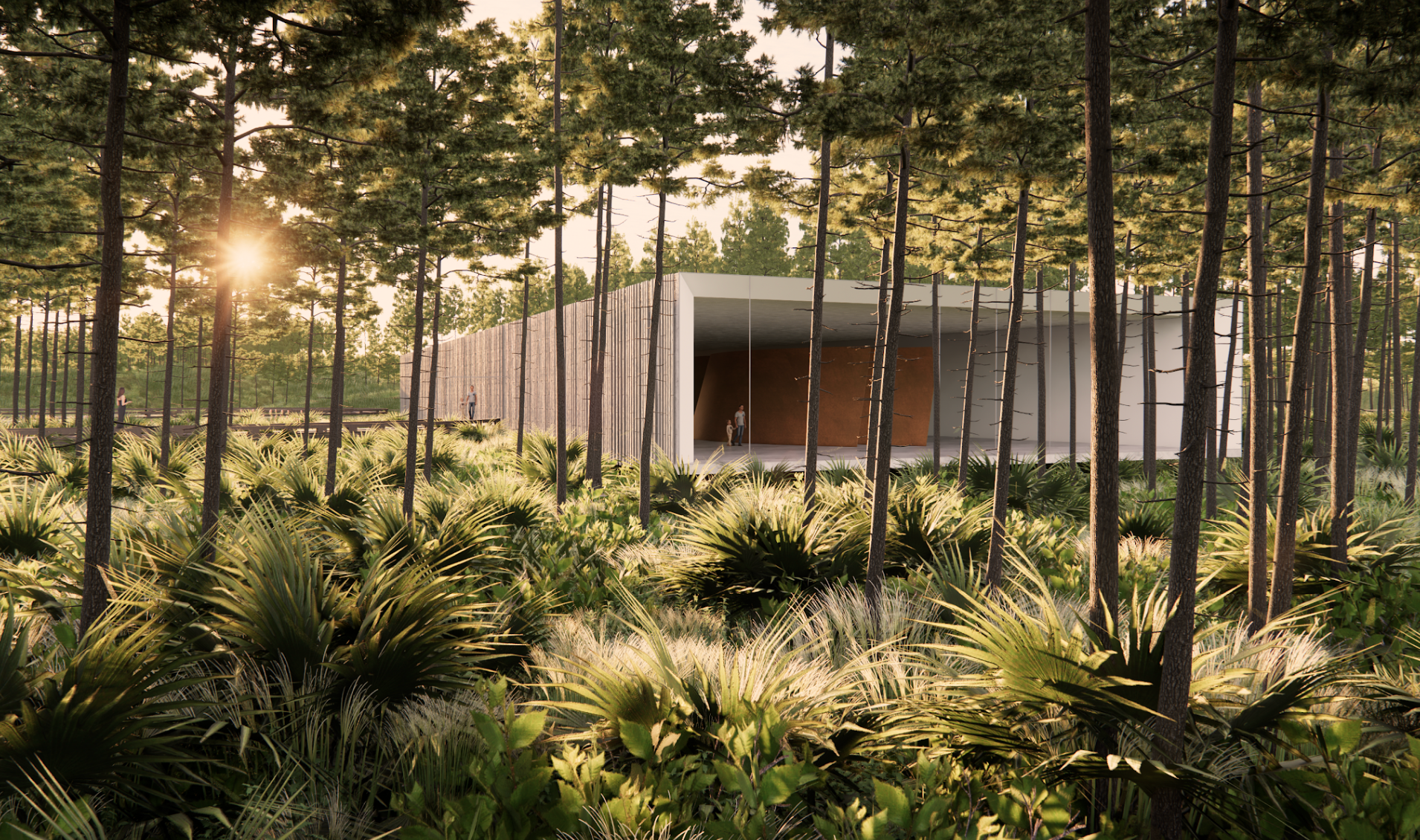
As part of the Untitled Edit's new series on Collection Building, we continue to spotlight collectors who engage meaningfully with our fairs. This month, we're pleased to feature Chloe Berkowitz, a Miami-based arts philanthropist and founder of the Berkowitz Contemporary Foundation (BCF), established in 2013 to bring transformative contemporary and modern art to the public through communal spaces and inclusive cultural experiences. Currently developing Longleaf Art Park in Northwest Florida—a 15.5-acre cultural destination anchored by Richard Serra's "The Passage of Time"—Chloe is committed to creating free, accessible art experiences that resonate across diverse communities. She also actively supports organizations, including YoungArts, the Dia Foundation, and The Bass Museum.
Untitled Art (UA): What does it mean to you to be a collector?
Chloe Berkowitz (CB): Over time, the process of collecting has evolved into two journeys: my private collection and the permanent collection for Berkowitz Contemporary Foundation. My early journey as a collector began as a pursuit of personal enjoyment but gradually evolved into its own form of storytelling. I now view my collection as a visual autobiography in a sense, where each work captures a moment in my life, how a particular work spoke to me, and how I was responding to my environment. There is also a bit more fluidity and less constraints, collecting simply for the love of living with art. When it comes to the collection for BCF, as the president, my curatorial role lends itself to a different level of responsibility and therefore a different set of rules. Though the practice is still rooted in story telling, the story is focused on a different journey. The BCF storyline is one of exploration through highly conceptual works that have a deep focus on not only the creator but the process of the creation. I have tried to create a collection that evolves to connect and engage with a wide variety of audiences. The works we acquire must have the ability to spark dialogue, inspire the public, and advance our mission of presenting exceptional art in public spaces.

UA: When and where did you start collecting? Do you remember the first work you acquired?
CB: My first memory of purchasing a piece of art was when I was around 15 years old from a small gallery in Sag Harbor, NY. The gallery had a big wicker basket filled with simple watercolor paintings of figures on loose pieces of paper, like something you would see as the product of an artist still honing their practice. I remember that beyond the painting, there was a beauty to the simplicity and honesty of these “sketches”. There was something about witnessing the artist’s exploration of material and process that I found compelling. Each one was being sold for about $20 and I bought as many as I could afford at the time.
UA: Do you have a specific philosophy you adhere to with your collecting and any advice you'd give to emerging collectors for how to meaningfully develop their own collections?
CB: My philosophy has always been to start with my heart and follow with a budget. On the most basic level, you want to live with a piece of art because it's beautiful (however you define beauty) and you enjoy living with it every day. My best advice to a new collector is to go exploring. Take some time to go to museums, galleries, hopefully an art fair, or even carve out an hour or two when you travel. Experiencing art firsthand is the only way to truly learn what moves you. The most meaningful collections grow out of curiosity, patience, and intuition. As your collection starts to grow, ask yourself, “What story am I telling?”

UA: How and where do you discover new artists?
CB: Discovery can happen almost anywhere. It might be in galleries, museums, or artist studios, but it can also happen through conversations with other collectors or by visiting unexpected spaces and independent initiatives. I think the path to discovery is about staying open and constantly looking. Curiosity is essential. Ask questions, explore widely, and be willing to take chances. Never be intimidated by a new experience or space. I have made some of my best connections by pushing myself out of my comfort zone.
UA: What resources have been most valuable in shaping your collection?
CB: It’s not one factor but really a combination of experiences over time that have allowed me to shape my collecting process. With that being said, I really appreciate the meaningful conversations that come from engaging directly with an artist about their work. Those exchanges offer a unique and invaluable insight into their practice, offering a deeper understanding of their ideas and process.
UA: Is there an artist or artists that you discovered or acquired at Untitled Art, and do you have any highlights from the fair in Miami Beach?
CB: This year at the fair it was especially exciting to witness the strong presence of Miami-based artists, complemented by a major showing from Fountainhead artists and alumni, one of Miami’s Artist in Residency programs. I have to commend Untitled Art for carving out significant space for the locals, one of my favorites being Roscoe B. Thicke III, whose work was shown by homework (Miami), a revolutionary of storytelling.

UA: What, in your opinion, should the role of art fairs be in this moment?
CB: Art fairs are a great resource for artists and collectors across the board, a true environment to foster connection. For collectors both old and new it's a unique experience to discover a wide variety of art while also having the ability to speak directly to the artist. For artists, it serves as an important platform to form relationships with collectors and fellow artists, helping to strengthen and expand their network.
UA: What do you enjoy most about Miami Art Week?
CB: Miami Art Week is one of the most dynamic moments on the global art calendar. The range of artists, exhibitions, and conversations you encounter creates a unique environment for inspiration and dialogue. It is also a moment when the broader creative community truly converges. Because it is such a significant week for the art world and the cultural industries more broadly, people from across the ecosystem show up, which makes the energy of the week incredibly exciting.